വിവരണം
പരിചയം: ജലത്തിന്റെ നിരന്തരമായ യാത്ര
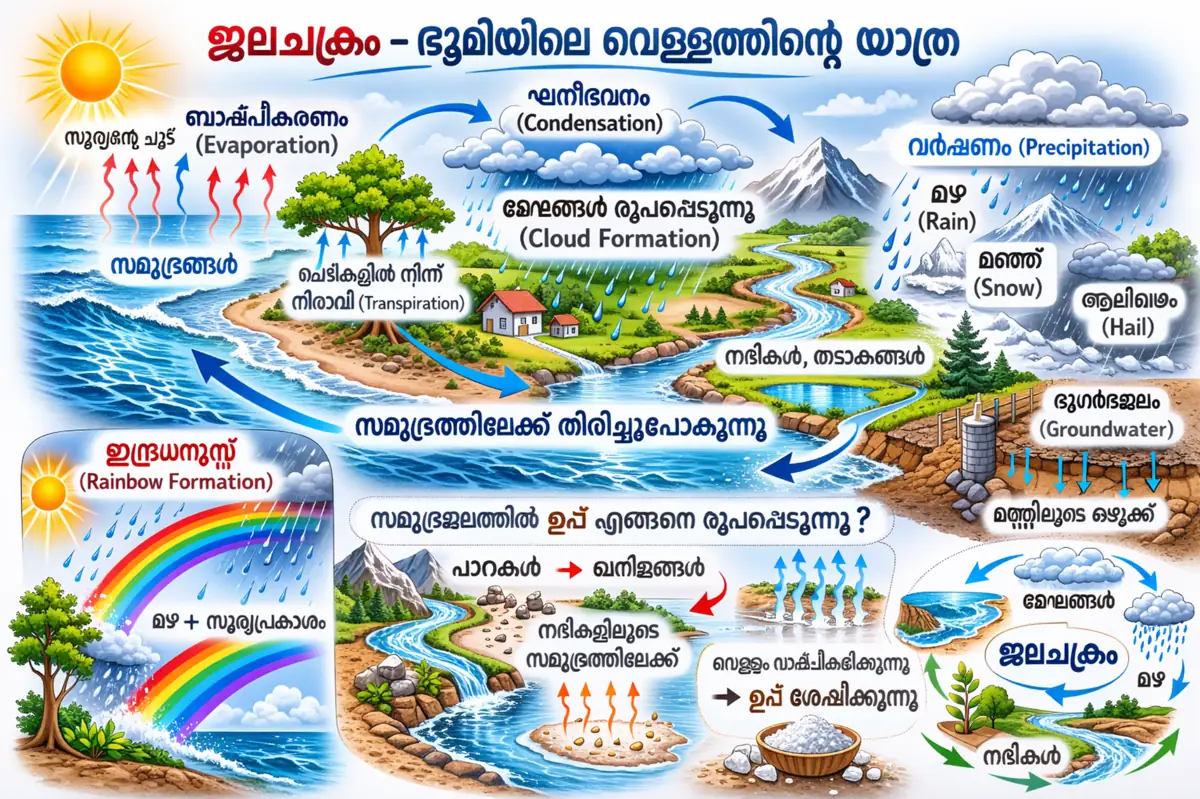
ഭൂമിയിലെ വെള്ളം ഒരിടത്ത് നിൽക്കാതെ നിരന്തരം സഞ്ചരിച്ചുകൊണ്ടിരിക്കുന്നു. ഈ സ്വാഭാവിക പ്രക്രിയയെ ജലചക്രം (Water Cycle) എന്ന് വിളിക്കുന്നു.
ജലചക്രത്തിൽ ബാഷ്പീകരണം, സ്വേദനം, ഘനീഭവനം, മേഘ രൂപീകരണം, വർഷപാതം, ശേഖരണം എന്നിവ ഉൾപ്പെടുന്നു.
ഈ പ്രക്രിയ കോടിക്കണക്കിന് വർഷങ്ങളായി ഭൂമിയിൽ നടക്കുന്നു, കൂടാതെ ഭൂമിയിലെ ജീവജാലങ്ങളുടെ നിലനിൽപ്പിനും അത്യന്തം പ്രധാനമാണ്.
ഘട്ടം 1: ബാഷ്പീകരണം – വെള്ളം ആകാശത്തിലേക്ക് ഉയരുന്നു
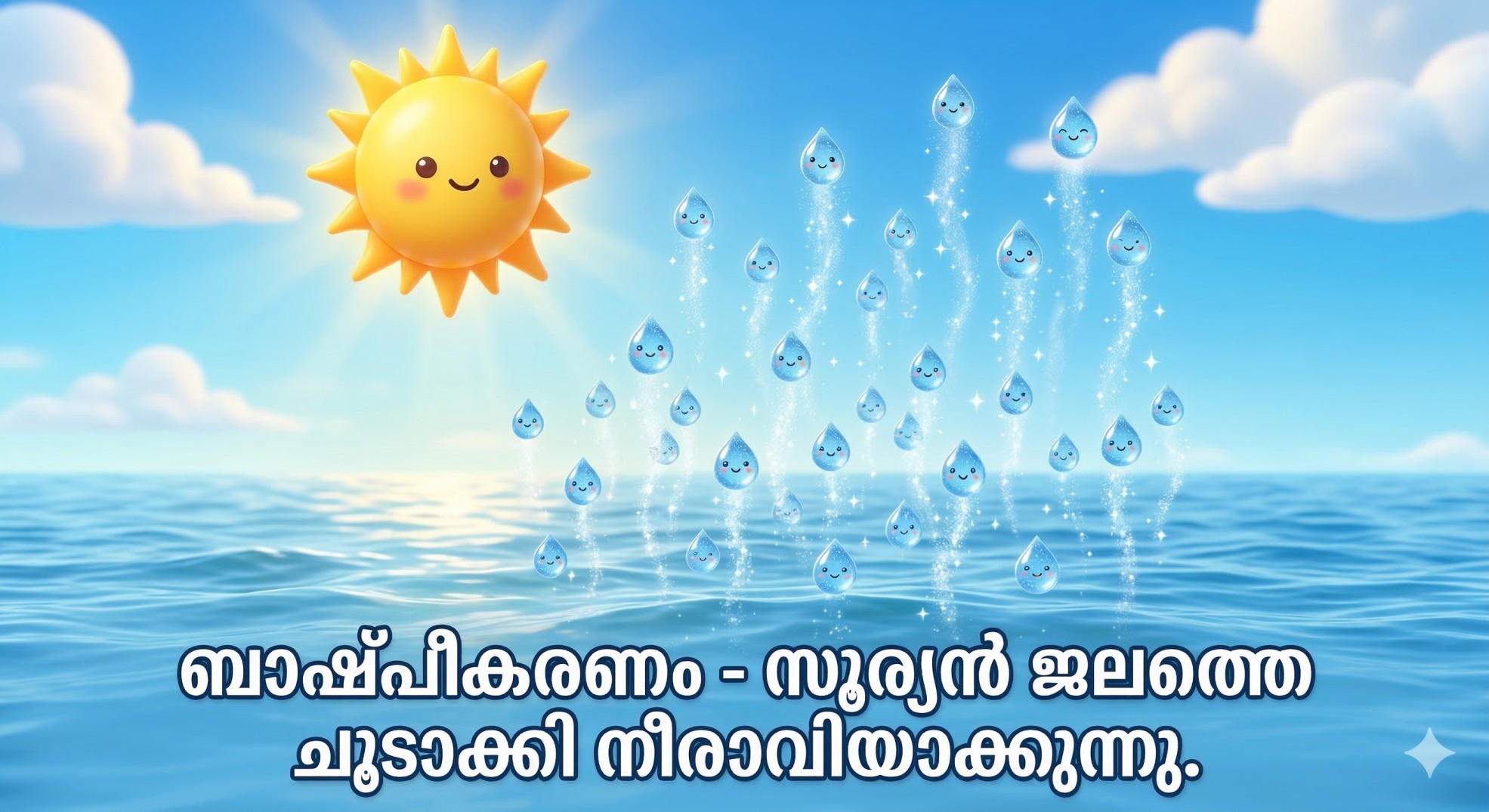
സൂര്യന്റെ ചൂട് സമുദ്രങ്ങൾ, നദികൾ, തടാകങ്ങൾ, കുളങ്ങൾ, മണ്ണ് എന്നിവിടങ്ങളിലെ വെള്ളത്തെ ചൂടാക്കുന്നു.
ചൂട് ലഭിക്കുമ്പോൾ വെള്ളം ദ്രാവകാവസ്ഥയിൽ നിന്ന് അദൃശ്യമായ നീരാവിയായി മാറുന്നു. ഈ പ്രക്രിയയെ ബാഷ്പീകരണം (Evaporation) എന്ന് പറയുന്നു.
ഭൂമിയുടെ ഉപരിതലത്തിന്റെ 70 ശതമാനത്തിലധികം സമുദ്രങ്ങൾ ആയതിനാൽ, അന്തരീക്ഷത്തിലെ ജലവാഷ്പത്തിന്റെ വലിയൊരു പങ്ക് അവയിൽ നിന്നാണ് ഉണ്ടാകുന്നത്.
മരങ്ങളും ചെടികളും ഇലകളിലെ ചെറിയ തുറവുകളിലൂടെ വെള്ളം പുറത്തുവിടുന്നു. ഈ പ്രക്രിയയെ സ്വേദനം (Transpiration) എന്ന് വിളിക്കുന്നു.
ഘട്ടം 2: ഘനീഭവനം – മേഘങ്ങളുടെ രൂപീകരണം
നീരാവി ആകാശത്തിലേക്ക് ഉയരുമ്പോൾ അവിടെയുള്ള വായു കൂടുതൽ തണുത്തതായിരിക്കും.
ഈ തണുപ്പിൽ നീരാവി വീണ്ടും ചെറിയ ജലതുള്ളികളായി മാറുന്നു. ഈ പ്രക്രിയയാണ് ഘനീഭവനം (Condensation).
ഈ ചെറിയ തുള്ളികൾ പൊടി, പുക, ഉപ്പ് കണങ്ങൾ പോലുള്ള സൂക്ഷ്മ കണങ്ങളോട് ചേർന്ന് മേഘങ്ങൾ രൂപപ്പെടുത്തുന്നു.
മേഘങ്ങൾ അവയുടെ കനം അനുസരിച്ച് വെളുപ്പ്, ചാരനിറം, ഇരുണ്ട നിറം എന്നിവയായി കാണപ്പെടാം.
ഘട്ടം 3: സംയോജനം – തുള്ളികൾ വലുതാകുന്നു
മേഘത്തിനുള്ളിലെ ജലതുള്ളികൾ വായു പ്രവാഹങ്ങളാൽ നിരന്തരം ചലിച്ചുകൊണ്ടിരിക്കുന്നു.
ചലനത്തിനിടെ ഇവ ഒന്നിനൊന്ന് കൂട്ടിമുട്ടുകയും ഒന്നിച്ചുചേരുകയും ചെയ്യുന്നു. ഈ പ്രക്രിയയെ സംയോജനം (Coalescence) എന്ന് പറയുന്നു.
ഇങ്ങനെ തുള്ളികൾ വലുതും ഭാരമേറിയതുമായ ജലതുള്ളികളായി വളരുന്നു.
ഘട്ടം 4: വർഷപാതം – മഴ ഭൂമിയിലേക്ക് വീഴുന്നു
ജലതുള്ളികൾ വളരെ വലുതാകുമ്പോൾ അവയ്ക്ക് മേഘത്തിനുള്ളിൽ നിലനിൽക്കാൻ കഴിയില്ല. അപ്പോൾ ഗുരുത്വാകർഷണം അവയെ ഭൂമിയിലേക്ക് താഴേക്ക് വലിച്ചിടുന്നു.
ഇതാണ് വർഷപാതം (Precipitation).
വർഷപാതത്തിന്റെ പ്രധാന രൂപങ്ങൾ
മഴ – ദ്രാവക ജലതുള്ളികൾ
മഞ്ഞ് – തണുത്ത പ്രദേശങ്ങളിൽ രൂപപ്പെടുന്ന ഐസ് ക്രിസ്റ്റലുകൾ
ആലിപ്പഴം – മേഘങ്ങളിൽ രൂപപ്പെടുന്ന കഠിനമായ ഐസ് ഗോളങ്ങൾ
സ്ലീറ്റ് – ചെറിയ ഐസ് കണങ്ങൾ
ഘട്ടം 5: ശേഖരണം – വെള്ളം ഭൂമിയിൽ ശേഖരിക്കുന്നു
മഴയായി വീഴുന്ന വെള്ളം വിവിധ വഴികളിലൂടെ സഞ്ചരിക്കുന്നു.
ചില വെള്ളം ഭൂമിയുടെ ഉപരിതലത്തിലൂടെ ഒഴുകി നദികളിലും തടാകങ്ങളിലും എത്തുന്നു. ഇതിനെ Surface Runoff എന്ന് പറയുന്നു.
നദികൾ ഈ വെള്ളം വീണ്ടും സമുദ്രത്തിലേക്ക് കൊണ്ടുപോകുന്നു.
ചില വെള്ളം മണ്ണിനുള്ളിലേക്ക് കടന്ന് ഭൂഗർഭജലമായി മാറുന്നു.
തണുത്ത മേഘങ്ങളും മഞ്ഞും
വളരെ തണുത്ത പ്രദേശങ്ങളിൽ മേഘത്തിനുള്ളിലെ ജലതുള്ളികൾ ഐസ് ക്രിസ്റ്റലുകളായി മാറുന്നു.
ഇവ വലുതാകുമ്പോൾ മഞ്ഞുതുള്ളികളായി ഭൂമിയിലേക്ക് വീഴും.
ചിലപ്പോൾ ശക്തമായ വായു പ്രവാഹങ്ങൾ തുള്ളികളെ മുകളിലേക്കും താഴേക്കും കൊണ്ടുപോകുന്നു. ഇതിലൂടെ പലതവണ ഐസ് പാളികൾ രൂപപ്പെടുകയും അവസാനം ആലിപ്പഴമായി വീഴുകയും ചെയ്യുന്നു.
ഇന്ദ്രധനുസ്സ് രൂപപ്പെടുന്നത്
മഴത്തുള്ളികളിലൂടെ സൂര്യപ്രകാശം കടന്നുപോകുമ്പോൾ അത് വളഞ്ഞ് പല നിറങ്ങളായി പിരിയുന്നു.
ഇത് ഇന്ദ്രധനുസ്സ് (Rainbow) എന്നറിയപ്പെടുന്നു.
ഇന്ദ്രധനുസ്സിലെ ഏഴ് നിറങ്ങൾ
ചുവപ്പ്
ഓറഞ്ച്
മഞ്ഞ
പച്ച
നീല
ഇൻഡിഗോ
വയലറ്റ്
സാധാരണയായി മഴയ്ക്ക് ശേഷം സൂര്യന്റെ വിപരീത ദിശയിൽ ഇന്ദ്രധനുസ്സ് കാണപ്പെടുന്നു.
സമുദ്രജലം ഉപ്പുള്ളതാകുന്നത് എന്തുകൊണ്ട്
മഴവെള്ളം അല്പം അമ്ലസ്വഭാവമുള്ളത് ആണ്.
മഴവെള്ളം പാറകളിലും മണ്ണിലും ഒഴുകുമ്പോൾ അവയിൽ നിന്ന് സോഡിയം, ക്ലോറിൻ പോലുള്ള ഖനിജങ്ങൾ ലയിക്കുന്നു.
നദികൾ ഈ ഖനിജങ്ങൾ സമുദ്രത്തിലേക്ക് കൊണ്ടുപോകുന്നു.
ലക്ഷക്കണക്കിന് വർഷങ്ങൾക്കിടെ ഈ ഖനിജങ്ങൾ സമുദ്രത്തിൽ അടിഞ്ഞുകൂടുന്നു. വെള്ളം ആവിയായി മാറുമ്പോഴും ഉപ്പ് അവിടെ തന്നെ തുടരുന്നു.
അതുകൊണ്ടാണ് സമുദ്രജലം ഉപ്പുള്ളതും, നദികളും തടാകങ്ങളും സാധാരണയായി ശുദ്ധജലമുള്ളതും ആയത്.
English
Introduction: The Continuous Journey of Water
Water on Earth is constantly moving through a natural and continuous process called the Water Cycle. This cycle describes how water travels from the Earth's surface into the atmosphere and back again.
The water cycle includes several important stages such as evaporation, transpiration, condensation, cloud formation, precipitation, and collection.
This natural process has been occurring for billions of years and is essential for maintaining life on Earth. It helps distribute fresh water across the planet and regulates weather and climate.
Step 1: Evaporation – Water Rises Into the Atmosphere
The water cycle begins when the Sun heats water in oceans, rivers, lakes, ponds, and even wet soil.
When water absorbs heat energy, it changes from a liquid state into water vapor, which is an invisible gas. This process is called evaporation.
Oceans contribute the largest amount of water vapor because they cover more than 70% of the Earth's surface.
Plants also contribute to this process. Through small openings in their leaves, plants release water vapor into the air. This process is called transpiration.
Together, evaporation and transpiration add large amounts of water vapor to the atmosphere every day.
Step 2: Condensation – Formation of Clouds
As water vapor rises higher into the atmosphere, the surrounding air becomes cooler.
When the vapor cools down, it loses heat energy and changes back into tiny liquid water droplets. This process is known as condensation.
These droplets attach themselves to tiny particles in the air such as dust, smoke, or salt particles.
Millions of these small droplets gather together to form clouds.
Clouds may appear white, gray, or dark, depending on their thickness and the amount of water they contain.
Step 3: Coalescence – Droplets Grow Larger
Inside clouds, water droplets are constantly moving due to air currents and wind movements.
As these droplets move around, they collide and combine with each other. This process is called coalescence.
Over time, the droplets grow larger and heavier. Eventually, they become too heavy to remain suspended in the cloud.
Step 4: Precipitation – Water Falls to the Earth
When the water droplets become large and heavy, gravity pulls them down toward the Earth's surface. This falling of water from clouds is called precipitation.
Precipitation can occur in several different forms depending on the temperature of the atmosphere.
Types of Precipitation
Rain – Liquid water droplets that fall to the ground.
Snow – Frozen ice crystals that fall in colder regions.
Hail – Hard balls of ice formed in strong storm clouds.
Sleet – Small frozen raindrops or ice pellets.
Among these, rain is the most common form of precipitation in many parts of the world.
Step 5: Collection – Water Returns to Earth
Once precipitation reaches the ground, the water follows several different paths.
Some water flows across the land surface into rivers, streams, and lakes. This movement is called surface runoff.
These rivers eventually carry the water back to the oceans, completing one stage of the water cycle.
Some water soaks into the soil and becomes groundwater. Groundwater moves slowly beneath the Earth's surface and may later emerge through springs, wells, or rivers.
Ice, Snow, and Cold Clouds
In very cold regions of the atmosphere, the water droplets inside clouds can freeze and form ice crystals.
When these crystals grow larger, they fall from the sky as snowflakes.
In warmer regions, snowflakes may melt while falling and reach the ground as rain.
Sometimes strong upward air currents carry droplets up and down repeatedly inside clouds. Each time they rise, they freeze into layers of ice. Eventually they fall as hailstones.
How Rainbows Form
Rainbows appear when sunlight passes through raindrops in the atmosphere.
When light enters a raindrop, it bends (refracts), then reflects inside the droplet, and bends again when it exits.
This process separates white sunlight into its different colors.
Seven Colors of a Rainbow
Red
Orange
Yellow
Green
Blue
Indigo
Violet
Rainbows usually appear opposite the Sun after rainfall.
Why Ocean Water Is Salty
Rainwater is slightly acidic and slowly breaks down rocks and minerals on land.
As rivers flow across mountains, soil, and rocks, they dissolve tiny amounts of minerals such as sodium and chlorine.
These minerals are carried by rivers into the oceans.
Over millions of years, these minerals accumulate in ocean water. Because water continuously evaporates but the salt remains behind, the concentration of salt increases.
This is why oceans contain salty water, while most rivers and lakes contain fresh water.